Delivered
Structured capture & approval workflows
Power Platform applications that turned quotation, approval and sample-tracking steps into structured, traceable records for research facilities.
loading profile … ok
Clinical data · Bioinformatics · Research infrastructure
I’m Mogahid Sabeel, a Junior Clinical Data Manager with Alleanza Contro il Cancro. I bring a background in bioinformatics, HPC and workflow automation to one question: how do we make research data accurate, traceable and ready for responsible use?
Since July 2026 I have worked as a Junior Clinical Data Manager with Alleanza Contro il Cancro, operationally based at IEO – European Institute of Oncology, contributing to Health Big Data: a national programme connecting the Italian IRCCS research networks.
Views on this site are my own and do not represent any employer or programme.
Clinical-data quality is not simply a final check. It is part of the research infrastructure.
Selected work from previous and ongoing practice. Every card says what stage the work actually reached — delivered, strategy, or practice — and what is deliberately left out.
Power Platform applications that turned quotation, approval and sample-tracking steps into structured, traceable records for research facilities.
Bioinformatics and NGS workflows in Python, Bash and Snakemake, plus hands-on support for researchers running and troubleshooting jobs on HPC.
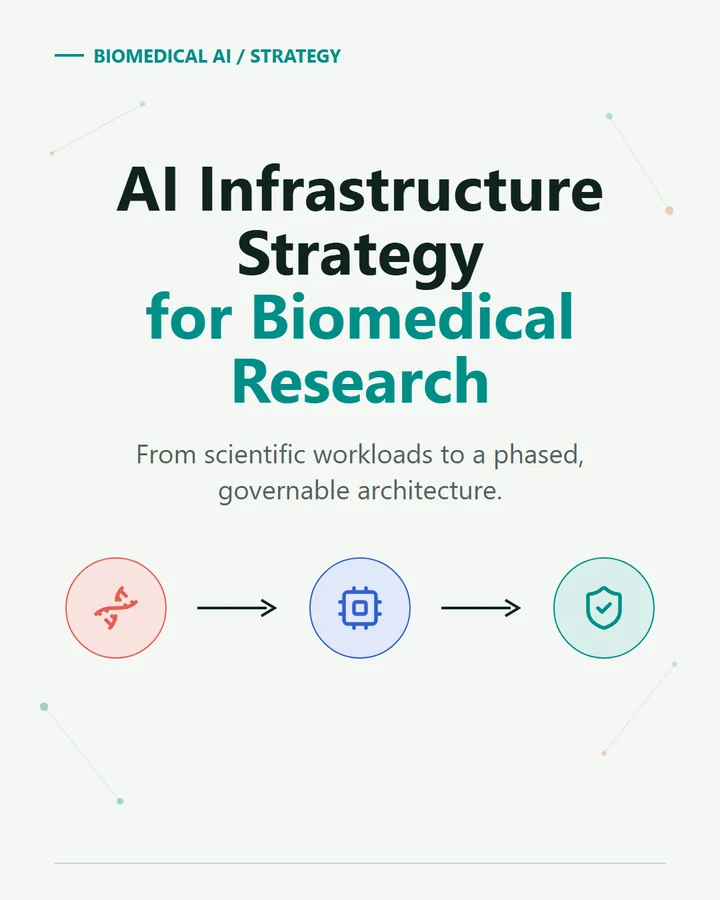
Translated genomics, imaging and AI-research workloads into a phased, governable architecture: pilot, scale, federate.
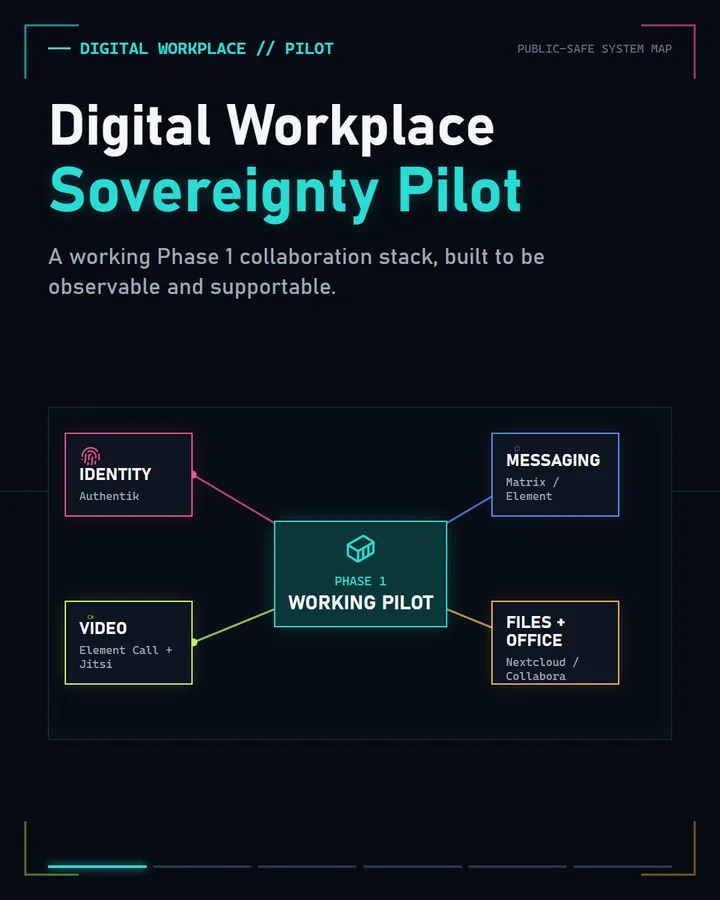
Assessed EU-centric and open-source alternatives, then deployed and documented a working multi-service pilot on an EU-hosted server.
A local-first knowledge system that separates source facts, proposals and decisions — with closeout records and hand-over rules for AI-assisted work.
Synthetic-only practice: SQL quality checks, a FHIR sandbox for Patient-resource workflows, and an OpenStack + Ansible lab for account automation.
Delivered
Delivered
Strategy · proposal
Delivered · Phase 1 pilot
Working practice
Learning lab
Step 1 of 4
Start from inputs, people, decisions and hand-offs — before choosing a tool or changing a process.
Turn assumptions into visible rules: completeness, ranges, consistency — and who resolves each exception.
Record where each value came from, which version of a rule applied, what changed and why.
Leave runbooks, data dictionaries and decision logs that let someone else repeat the work without me.
Draft, proposed, sent and approved are different states — and I label them that way.
Missing evidence is recorded as missing, never quietly filled in or averaged away.
Prototypes and tests run on synthetic data before anything touches real records.
Every important claim points back to a source someone else can check.
Different fields, same question each time: can we trust the data enough to act on it?
Alleanza Contro il Cancro · operationally based at IEO, Milan
Clinical-data quality, harmonisation and interoperability within the Health Big Data programme.
IRCCS Ospedale San Raffaele · CSTOR & COSR
Power Platform applications, NGS workflows, HPC support and digital research infrastructure, working across scientific, operational and technical teams.
CodEng · Varese
Teaching programming fundamentals — and learning to explain technical ideas simply.
Università degli Studi di Padova
Bioinformatics, omics, molecular pathology and epidemiology.
Agricultural research · Sudan
Research data collection, analysis and reporting — the first lessons in data quality.
University of Gezira · Sudan
For professional exchanges on data quality, reproducible workflows and research infrastructure, LinkedIn is the best place to reach me.
Built by someone who learned computing on beige boxes.